For parents of neurodivergent children and individuals with developmental differences in South Florida, water safety is an urgent, non-negotiable priority. Children on the autism spectrum (ASD) and those with sensory processing sensitivities are naturally drawn to the shimmering reflections, gentle buoyancy, and sensory input of water. Tragically, according to the National Autism Association, drowning is responsible for over 90% of all accidental deaths among children with autism aged 14 and younger following wandering (elopement) incidents into South Florida swimming pools, lakes, and canals. Traditional swim schools, with their crowded lanes, echoing noise, and rigid drill structures, frequently fail these children, often labeling them "uncooperative" or asking families to leave.
Special Needs Swim Lessons in Miami: Adaptive Coaching in 90°F Sensory Warm Pools & In-Home
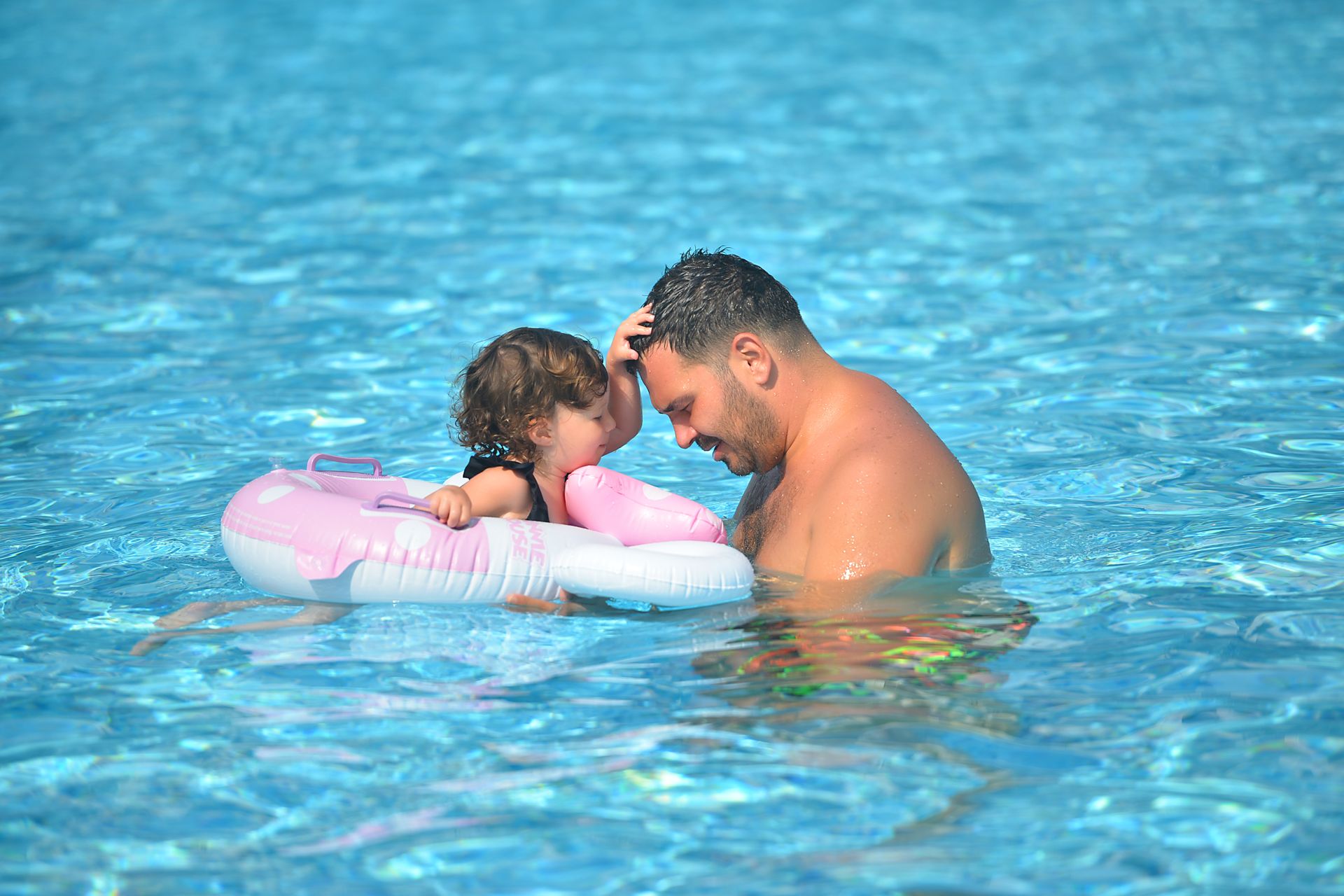
At MIA Swim School, we provide a deeply compassionate, neurodiversity-affirming alternative: specialized, private 1-on-1 adaptive and special needs swim lessons tailored to your child's unique sensory profile, communication style, and physical pace. Taught across 18 quiet, climate-controlled 90°F warm-water therapy pools throughout Miami-Dade County, or directly in the familiar comfort of your private home pool, our certified adaptive specialists instill vital water boundary reflexes and life-saving buoyancy skills while celebrating every individual milestone.
Key Highlights of Our Miami Adaptive Aquatic Curriculum
Every adaptive swimming session at MIA Swim School is designed around sensory regulation, behavioral support, and life-saving physical reflexes. For families seeking high-frequency daily survival micro-lessons specifically for infants, please explore our ISR Survival Swimming & Roll-to-Float curriculum.
Autism Wandering & Drowning Defense
Therapeutic 90°F Sensory Warm Water
Swim Angelfish® & Visual Communication Standards
Dual-Core Location Flexibility
Autism Swim Lessons in Miami: Life-Saving Wandering Prevention & Boundary Recognition
The link between autism spectrum disorder and water attraction is well-documented in pediatric research. Autistic children frequently seek out water for its soothing sensory pressure and acoustic dampening qualities. When a child experiences sensory overload, anxiety, or curiosity, they may wander away from home or school—a behavior known as elopement. In South Florida, where residential canals, backyard pools, and ocean waterways are omnipresent, unattended water exploration can become fatal within seconds.
Our specialized curriculum approaches swimming lessons not merely as an athletic activity, but as a critical neurological safety protocol designed to save your child's life.
Our 4-Phase Autism Water Safety Defense Sequence
The following structured framework is taught systematically to build reflexive safety responses in neurodiverse children.
Eliminating Sensory Overload: Low-Traffic Hours & UV Water
For a child with autism or sensory processing sensitivity, the standard commercial pool environment is an acoustic and sensory nightmare. Echoing whistle blasts, rowdy public swim crowds, cold water, and harsh chemical chlorine fumes can trigger immediate sensory meltdowns. In our 18 campus pools, we schedule adaptive lessons during designated low-traffic quiet hours, utilize secondary UV water purification that eliminates chlorine odor, and maintain a quiet, calm aquatic sanctuary.
1. Perimeter Boundary Conditioning ("Freeze and Wait")
2. Step and Ramp Grounding
3. The Emergency Roll-to-Float Maneuver
4. Wall Navigation and Independent Exit
The Swim Angelfish® Adaptive Methodology: Sensory Regulation & PECS Visual Schedules
Children with special needs do not learn through traditional verbal drill commands like "kick harder" or "keep your head down." Abstract auditory directions often create cognitive confusion and anxiety. At MIA Swim School, our instructors utilize evidence-based adaptive methodologies adapted from the internationally acclaimed Swim Angelfish® framework and applied behavioral analysis (ABA) principles.
By combining tactile desensitization, proprioceptive input, and visual communication, we make swimming predictable, achievable, and joyful.
Evidence-Based Instructional Tools for Special Needs Learners
Our adaptive specialists utilize a comprehensive toolkit of proven sensory and communication strategies:
Picture Exchange Communication System (PECS)
Gradual Tactile Desensitization
Deep Pressure Proprioceptive Hydrotherapy
Bilateral Motor Modeling
Customized Adaptive Swim Lessons in Miami for Every Neurodivergent Profile
No two neurodivergent learners are identical. An energetic 7-year-old with ADHD requires a fast-paced, gamified lesson structure with rapid transitions, whereas an anxious 10-year-old on the autism spectrum may need slow, methodical pacing with deep physical reassurance. Our coaches conduct an extensive intake evaluation with parents, therapists, and caregivers to understand your child's specific diagnosis, sensory triggers, and motivators.
The profiles below illustrate how our coaches adapt their instructional techniques to accommodate various developmental and physical conditions.
Autism Spectrum Disorder (ASD) & Non-Verbal Learners
Children on the autism spectrum require steady routine, predictable sensory cues, and patience to thrive in an aquatic environment.
- Instructional Focus: Water wandering defense, predictable routine maintenance, and non-verbal visual schedules.
- Pedagogical Strategy: We incorporate the child's special hyper-fixations (such as counting numbers, marine animals, or geometric shapes) into swimming games, transforming learning into an engaging, preferred activity.
ADHD & Executive Function Difficulties
Students with ADHD benefit from structured physical movement that channels their natural energy into focused water safety skills.
- Instructional Focus: Sustained attention, impulse control around pool edges, and cardiovascular energy release.
- Pedagogical Strategy: High-energy obstacle courses, fast-paced micro-drills, immediate praise, and structured sensory movement that channels boundless energy into disciplined stroke mechanics.
Down Syndrome (Trisomy 21) & Motor Hypotonia
Swimmers with Down syndrome thrive with buoyancy-assisted support that builds physical stamina while respecting joint flexibility limits.
- Instructional Focus: Core muscle strengthening, head and neck control, and gentle cardiovascular conditioning.
- Pedagogical Strategy: Due to ligamentous laxity and potential atlantoaxial instability, our coaches avoid hyper-extension of the neck, utilizing supportive buoyancy aids and warm 90°F water to build muscle tone safely.
Cerebral Palsy & Physical Mobility Differences
Hydrotherapy in warm water offers unparalleled physical freedom for children and adults experiencing physical movement limitations.
- Instructional Focus: Spasticity reduction, joint range-of-motion expansion, and buoyancy-assisted independent movement.
- Pedagogical Strategy: In 90°F warm water, gravity is reduced by 90%, relieving pressure on joints and allowing tight, spastic muscles to lengthen and relax. Swimmers experience liberating physical freedom that is impossible on land.
For older neurodivergent swimmers who master water safety and wish to explore lap swimming, explore our Kids Swimming Lessons in Miami or our Adult Swimming Lessons in Miami for older learners.
Certified Adaptive Swim Coaches in Miami: Swim Angelfish Credentials & Empathy
The success of adaptive swimming depends entirely on the empathy, emotional intelligence, and specialized qualifications of the instructor. Traditional swim instructors often lack the training required to understand sensory processing disorder, echolalia, or sensory meltdowns. At MIA Swim School, our adaptive instructors are career aquatic therapists, special education educators, and certified adaptive swim coaches who possess immense patience and deep love for neurodiverse children.
We partner closely with your family, occupational therapists, and BCBA behavioral specialists to ensure consistent, supportive reinforcement.
Comprehensive Safety Vetting & Specialized Adaptive Certifications
Every adaptive coach on our team maintains rigorous safety and therapeutic credentials. To learn more about our dedicated adaptive coaching faculty, visit our Meet Our Adaptive Coaches portal.
Specialized Adaptive Aquatic Certifications
Pediatric Life Support & First Aid
Annual Level 2 Livescan Background Clearance
Neurodiversity-Affirming Training
Partnership with Therapy Teams
Personalized Private Swim Instruction: 4-Step In-Water Assessment & Dedicated Coach Matching
Every swimmer is unique. Rather than rigid one-size-fits-all packages or static rate cards, MIA Swim School begins with a comprehensive, low-stress evaluation to assess current comfort levels, natural buoyancy, and individual aquatic goals.
Step 1: In-Water Skill Diagnostic
Step 2: Custom Milestone Roadmap
Step 3: Dedicated Instructor Placement
Step 4: Concierge Scheduling & Peace of Mind
18 Heated Sensory Pool Campuses & In-Home Adaptive Swim Coaching in Miami-Dade
Convenience and environmental consistency are essential for neurodivergent learners. Transitioning to unfamiliar environments can cause significant anxiety. MIA Swim School operates across 18 dedicated campus facilities and municipal partner aquatic centers throughout Miami-Dade County. Every facility in our network features heated 90°F warm water, secondary UV water filtration, private family changing restrooms, and gentle step entries.
Select your local community below to view campus location details, driving directions, and quiet-hour availability:
Coastal & Urban Miami Campuses
Families residing in downtown high-rises and coastal waterfront districts have convenient access to our dedicated pool lanes with easy parking:
- Brickell: Brickell Special Needs Swim Lessons — Jose Marti Aquatic Center campus at 351 SW 4th St, Miami, FL 33130.
- Downtown & Edgewater: Downtown Edgewater Adaptive Swim Lessons — Margaret Pace Park Pavilion at 1745 N Bayshore Dr, Miami, FL 33132.
- Miami Beach: Miami Beach Autism Swim Classes — Flamingo Park Aquatic Center at 999 11th St, Miami Beach, FL 33139.
- Sunny Isles Beach: Sunny Isles Special Needs Swimming — Pelican Community Park at 18115 N Bay Rd, Sunny Isles Beach, FL 33160.
- Aventura: Aventura Adaptive Swim Lessons — Founders Park Campus at 3375 NE 188th St, Aventura, FL 33180.
- Bal Harbour & Surfside: Bal Harbour Surfside Special Needs Swim — Surfside Community Center at 9301 Collins Ave, Surfside, FL 33154.
- Key Biscayne: Key Biscayne Adaptive Swim Lessons — Key Biscayne Community Center at 10 Village Green Way, Key Biscayne, FL 33149.
Historic Neighborhoods & Family Communities
For parents in Miami-Dade's family-centered residential suburbs, our partner locations offer serene, heated pool environments with dedicated youth lap lanes:
- Coral Gables: Coral Gables Special Needs Swim Lessons — Venetian & Youth Center Pavilion at 2701 de Soto Blvd, Coral Gables, FL 33134.
- Coconut Grove: Coconut Grove Adaptive Swim Classes — Peacock Park Campus at 2690 S Bayshore Dr, Coconut Grove, FL 33133.
- Pinecrest: Pinecrest Autism Swim Lessons — Pinecrest Community Center at 5855 SW 111th St, Pinecrest, FL 33156.
- South Miami: South Miami Special Needs Swim Lessons — Murray Park Aquatic Campus at 5800 SW 66th St, South Miami, FL 33143.
- Palmetto Bay: Palmetto Bay Adaptive Swimming Lessons — Coral Reef Park Campus at 7895 SW 152nd St, Palmetto Bay, FL 33157.
- Kendall: Kendall Autism Swim Classes — Continental Park Aquatic Pavilion at 10000 SW 82nd Ave, Miami, FL 33156.
- West Kendall: West Kendall Adaptive Swim Lessons — Westwind Lakes Campus at 15700 SW 112th St, Miami, FL 33196.
- Doral: Doral Special Needs Swim Lessons — Doral Legacy Park Campus at 11400 NW 82nd St, Doral, FL 33178.
- Miami Springs: Miami Springs Adaptive Swim Classes — Miami Springs Aquatic Center at 1401 Westward Dr, Miami Springs, FL 33166.
- Miami Lakes: Miami Lakes Autism Swim Lessons — Royal Oaks Park Campus at 6075 Miami Lakes Dr, Miami Lakes, FL 33014.
- North Miami Beach: North Miami Beach Special Needs Swim Lessons — Victory Park Aquatic Center at 17051 NE 19th Ave, North Miami Beach, FL 33162.
Frequently Asked Questions About Special Needs Swim Lessons in Miami
Parents of neurodivergent children have important questions regarding safety protocols, communication tools, and environmental accommodations. Here are direct answers to the most common questions our adaptive intake team receives.
How does adaptive swim instruction prevent autism wandering fatalities?
According to the National Autism Association, drowning accounts for over 90 percent of deaths following wandering (elopement) in autistic children under 14. Our adaptive curriculum establishes strict neurological boundary conditioning ("wait on the step"), physical perimeter recognition, and autonomous rollover breathing, giving neurodivergent children life-saving reflexes if they enter water unaccompanied.
How do your coaches communicate with non-verbal children?
Our instructors are trained in the Picture Exchange Communication System (PECS) and utilize laminated, waterproof visual schedule boards. We break every lesson into predictable visual icons (sit on step, bubble blowing, kick feet, back float, ring reward), eliminating uncertainty, reducing anxiety, and establishing total trust.
Why is 90°F warm water essential for sensory-friendly swimming?
Cold pool water (78°F to 82°F) triggers physical tactile defensiveness, sensory overload, and severe muscle spasticity in neurodivergent children. Our guaranteed 90°F warm therapy water acts as gentle hydrotherapy, relaxing the central nervous system, calming hyperactivity, and providing soothing proprioceptive deep pressure.
What happens if my child experiences a sensory meltdown during a lesson?
We operate with 100 percent neurodiversity affirmation. Our coaches never force or scold a dysregulated child. If a student becomes overwhelmed, we immediately step back, offer sensory calming toys, provide deep pressure hugs, or practice gentle water pouring on the pool steps until the child regains emotional regulation.
Do your instructors work with children with Down syndrome or physical disabilities?
Yes. Our coaches are trained in physical adaptive accommodations, including supporting ligamentous laxity and atlantoaxial instability in Down syndrome, low muscle tone (hypotonia), and spasticity in cerebral palsy. We utilize customized flotation supports and gentle buoyancy-assisted range-of-motion exercises.
Can adaptive lessons take place in our private home or condominium pool?
Yes. For children with severe sensory sensitivities or transition anxiety, private in-home lessons provide the ultimate familiar environment. The pool must be heated to at least 88°F–90°F. We provide a Certificate of Insurance (COI) naming your condominium association or property manager. Learn more in our Condo HOA & COI Guidelines.
Schedule a Confidential Adaptive Swim Assessment in Miami
Give your child the life-saving gift of water safety, sensory confidence, and joy. Fill out our confidential intake form below to schedule a private 30-minute adaptive assessment at one of our 18 heated campus pools or in the comfort of your private home pool. Our adaptive placement director will personally review your child's sensory profile and match you with a certified coach whose expertise aligns with your family's needs.
I consent to receive appointment notifications and scheduling updates via SMS or phone call in accordance with Florida Stat. § 501.059 (FTSA). I confirm that I am the parent or legal guardian aged 18 or older. Reply STOP to cancel.
"*" indicates required fields