Navigating teenage life in Miami without confident swimming skills can be stressful, socially isolating, and dangerous. From high school pool parties, beach trips to Key Biscayne and South Beach, to weekend boating outings on Biscayne Bay, water is central to adolescent social life in South Florida. Yet many teenagers who never learned to swim as children feel paralyzed by embarrassment, dreading the thought of being placed in public community classes alongside 6-year-olds wearing arm floaties. At MIA Swim School, we offer an empowering, completely private solution: dedicated 1-on-1 swim lessons for teens aged 13 to 17 that respect their maturity, dignity, and personal athletic goals.
Ages 13 to 17 · Private 1-on-1 Coaching
Swim Lessons for Teens in Miami: Private Coaching in 25-Yard Lanes & In-Home Pools
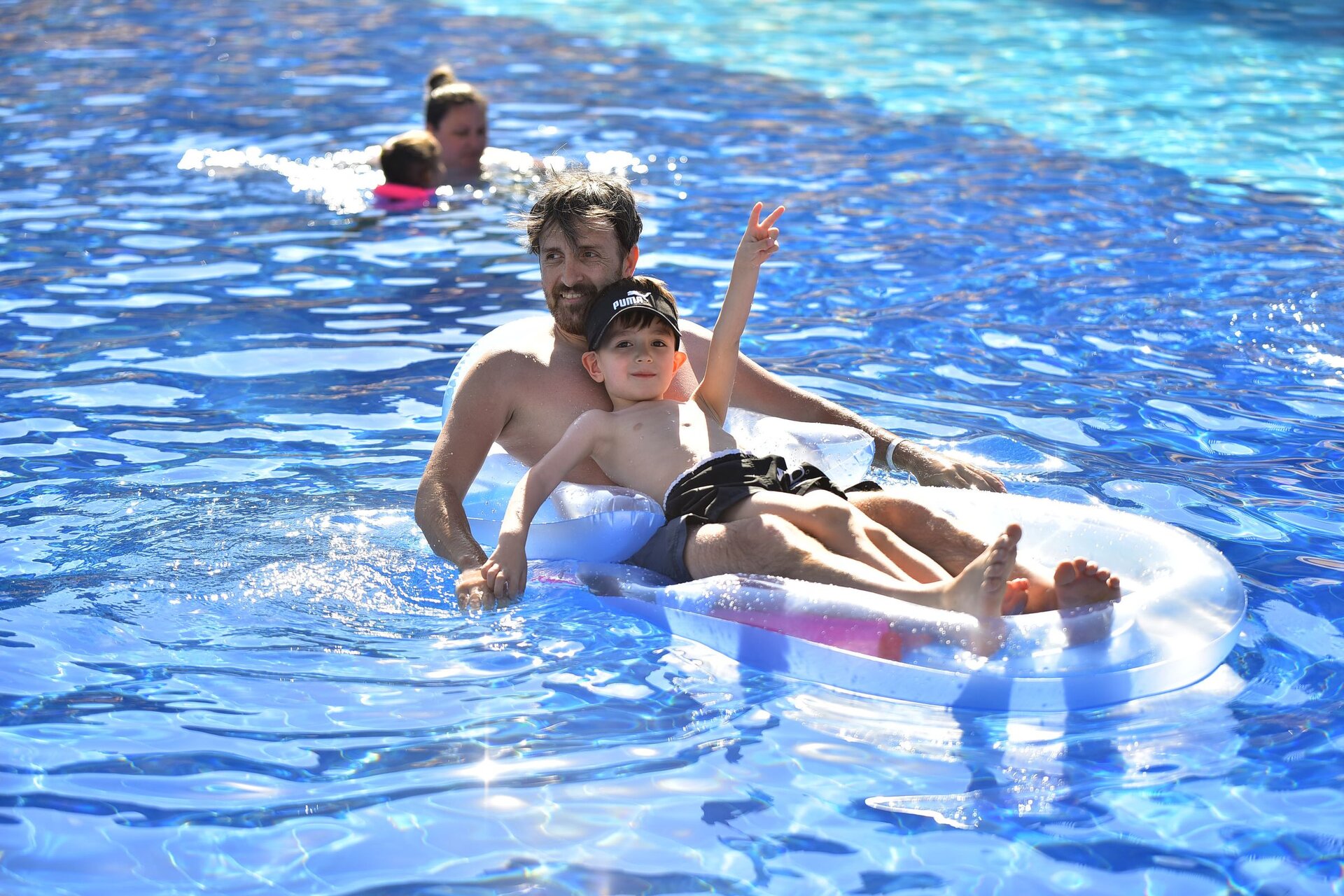
Our adolescent program operates across 18 dedicated 90°F warm-water campus facilities featuring real 25-yard competition lap lanes across Miami-Dade County, or through private concierge coach dispatch directly to your residential home or condominium pool. With transparent lesson rates starting from personalized rates per 45-minute technique session, zero annual registration fees, and three customized pathways ranging from beginner safety to varsity tryout prep, we help Miami teenagers master water with total confidence.
Adolescent Focus
Three Dedicated Focus Areas for Miami Teen Swimmers
Every teenage swimming lesson at MIA Swim School is designed around the unique muscular leverage and cognitive capabilities of adolescents.
100% Confidential Beginner Instruction
Absolute beginners learn water safety, deep-water treading, and effortless lap swimming in private lanes with zero peer spectators and zero childish games.
High School Varsity Swim Team Preparation
Intermediate swimmers condition for competitive high school tryouts with racing dive blocks, flip-turn somersaults, and pace-clock interval training.
Junior Lifeguard Certification Conditioning
Aspiring young lifeguards train to crush the physical fitness benchmarks required by Miami-Dade Fire Rescue and the American Red Cross.
Flexible 45-Minute & 60-Minute Formats
Extended session durations allow for a thorough muscular warm-up, biomechanical stroke drills, and aerobic conditioning sets.
Targeted Pathways
Three Targeted Tracks for Teen Swim Lessons in Miami: Beginner to Varsity Prep
Teenagers come to the pool with vastly different objectives. A 14-year-old who recently moved to South Florida may need foundational water survival skills to feel safe attending weekend boat trips with classmates. Meanwhile, a 16-year-old athlete may be trying out for their high school swim team or training for ocean lifeguard employment. Rather than forcing all adolescents into a generic curriculum, our coaches evaluate each student and design a targeted training progression.
Each of our three tracks delivers age-appropriate, dignified coaching tailored to your teen's physical capabilities and personal aspirations.
Track 1: Teen Beginner & Deep-Water Confidence (Ages 13 to 17)
This track is specifically designed for teenagers who cannot swim, feel acute fear in deep water, or never received formal swimming instruction during childhood.
- Dignified, Adult-Level Communication: We never treat teenagers like children. Our coaches explain the physical mechanics of water displacement, lung volume buoyancy, and fluid resistance in a mature, collaborative manner.
- Starfish Buoyancy and Airway Regulation: Learning relaxed horizontal floating on the front and back, rhythmic bilateral side breathing, and eliminating water inhalation reflexes.
- Deep-End Survival Treading: Conquering the fear of deep water by mastering relaxed eggbeater and scissor kicks to tread water effortlessly for 2 to 3 continuous minutes.
- Autonomous Lap Swimming: Developing relaxed, efficient freestyle and backstroke mechanics that allow teens to swim multiple lengths of the pool with ease.
Track 2: High School Varsity Swim Team Tryout Prep
For teens planning to try out for their high school varsity or junior varsity swim teams, technical precision and interval conditioning make the difference between making the squad or being cut.
- Competitive Tryout Standards: Training specifically for tryouts at top Miami public and private high schools, including Belen Jesuit, Gulliver Prep, Ransom Everglades, Miami Palmetto, Carrollton School of the Sacred Heart, and Columbus High School.
- Streamlined Racing Starts & Flip Turns: Perfecting explosive starts off competitive starting blocks, tight somersault flip turns on the pool wall, and powerful underwater dolphin kick breakouts.
- Pace-Clock Interval Endurance: Building cardiovascular threshold through structured 50-yard, 100-yard, and 200-yard interval sets that mirror high school swim team practices.
- Legal FINA Stroke Mechanics: Eliminating illegal butterfly kicks in breaststroke, one-hand touches, and non-simultaneous butterfly arm recovery to avoid race disqualifications.
Track 3: Junior Lifeguard & Ocean Safety Certification Prep
Becoming a certified lifeguard or ocean rescue specialist is one of the most prestigious, well-paying summer jobs available to Miami teenagers. However, the physical entry test is notoriously demanding.
- 100-Yard Continuous Swim Under 2:00 Minutes: Conditioning teens to complete a fast 100-yard freestyle swim without resting or touching the pool bottom.
- 30-Foot Submerged Underwater Swim: Training lung capacity and calm underwater propulsion to navigate 30 continuous feet underwater on a single breath.
- 2-Minute Hands-Free Treading: Mastering high-powered eggbeater kicking with arms elevated out of the water, simulating victim rescue support.
- Brick Retrieval from 10-Foot Deep End: Surface diving to retrieve a 10-pound rubber diving brick from the deep end, kicking backward to the surface, and swimming to the pool wall.
Swimmers interested in year-round competitive racing and state qualifying times can explore our specialized Competitive Stroke Coaching & Flip Turns curriculum.
Biomechanics & Fluid Dynamics
Why Teenagers Learn Swimming Faster Through Biomechanics & Fluid Dynamics
A common misconception among parents is that learning to swim in adolescence is much harder than learning as a toddler. In reality, teenagers possess significant physiological advantages that allow them to make breakthroughs at an astonishing speed. While a 5-year-old struggles to understand abstract biomechanical cues, a 15-year-old can comprehend concepts like surface area, torque, streamlined hydrodynamics, and propulsion.
By explaining the "why" behind every movement, our coaches turn swimming into an engaging science of movement, allowing teens to achieve full water autonomy in just 4 to 8 private lessons.
Physiological Advantages of Adolescent Swimmers
The table below highlights why adolescent swimmers experience rapid skill acquisition during private 1-on-1 instruction.
| Physical & Cognitive Trait | Young Children (Ages 4–8) | Teenagers (Ages 13–17) | Instructional Advantage for Teens |
|---|---|---|---|
| Limb Leverage & Reach | Short arms, minimal torque generation | Adult-proportioned wingspan and leg length | Generates massive forward propulsion with fewer stroke cycles |
| Aerobic Lung Capacity | Small thoracic cavity, rapid fatigue | Fully developed vital lung capacity | Sustains 50-yard intervals and calm underwater breath-holding |
| Cognitive Movement Processing | Imitative play and short attention span | Abstract spatial understanding of hydrodynamics | Analyzes video stroke feedback and applies micro-corrections |
| Core Muscle Stabilization | Developing postural control | Mature abdominal and spinal core engagement | Maintains flat, streamlined body posture with zero hip drag |
| Practice Time Focus | 30-minute attention limit | 45-minute to 60-minute athletic focus | Completes full high-intensity conditioning workouts |
Utilizing Distance-Per-Stroke (DPS) and Video Analysis
Rather than having teens thrash their arms wildly in the water, our instructors emphasize Distance-Per-Stroke (DPS). We teach teens how to anchor their hand in still water (the "high-elbow catch") and pull their body past their hand like climbing a ladder. By counting strokes per 25-yard length, teens visibly track their efficiency, often cutting their required strokes in half while doubling their forward speed.
Competitive Benchmarks
High School Varsity Swim Team Tryout Prep in Miami: Intervals, Dives & Flip Turns
Making the swim team roster at competitive Miami-Dade high schools requires far more than basic swimming ability. Varsity coaches conduct demanding time trials during the first week of August, expecting incoming freshmen and sophomores to arrive in peak physical condition with polished race mechanics. Swimmers who have only swum recreationally are often overwhelmed by pace-clock intervals and strict stroke legality rules.
Our Track 2 varsity prep curriculum is led by coaches with collegiate competitive swimming experience who bridge the gap between recreational swimming and competitive racing.
Critical Tryout Benchmarks Covered in Training
During private varsity preparation sessions, coaches focus on four critical competitive elements:
1. Racing Block Dive Starts
Mastering explosive, streamlined track starts off competitive blocks, deep clean entries, and tight underwater dolphin kicks past the 15-meter mark.
2. Somersault Flip Turns on the "T"
Eliminating slow touch-and-twist turns on the wall. Swimmers learn to read the bottom pool line "T", execute an aggressive tuck somersault, and push off on their back before twisting to streamline.
3. Bilateral Rhythm Breathing
Establishing alternating 3-stroke breathing patterns that provide equal peripheral vision across both sides of the race lane while preventing neck fatigue.
4. Pace-Clock Reading and Aerobic Sets
Teaching student-athletes how to read the pace clock for "leave-on-the-top" interval sets (such as 10 x 100 on 1:30), preparing them mentally for varsity practices.
Mentorship & Credentials
Certified Teen Swim Coaches in Miami: Mentorship & High-Performance Credentials
Adolescents do not respond well to coaches who are overly authoritative or, conversely, condescending. The best instructors for teenagers are inspiring mentors: coaches who have competed at high levels, understand the pressures of high school academics and athletics, and speak to teenagers as young adult equals. At MIA Swim School, our teen instructional faculty consists of seasoned competitive swimmers, certified lifeguards, and professional aquatic educators.
Every instructor combines technical mastery with positive, constructive communication that builds mental resilience, self-discipline, and genuine pride in personal progress.
Comprehensive Safety Vetting & Professional Credentials
Every coach assigned to our teen swimming curriculum meets rigorous professional standards. To view detailed biographies and coaching histories of our staff, visit our Meet Our Certified Miami Coaches portal.
American Red Cross Water Safety Instructor (WSI) Certification
Trained in the highest level of stroke mechanics, biomechanical diagnostics, and water safety instruction.
Collegiate and Competitive Swimming Experience
Instructors with personal competitive racing backgrounds at NCAA, club, or varsity levels.
American Red Cross Lifeguard, CPR/AED & First Aid
Certified in professional-level CPR for the Professional Rescuer, emergency oxygen administration, and adult AED protocols.
annual Level 2 Livescan background screening
Thorough criminal background checks conducted through the Florida Department of Law Enforcement (FDLE) and national criminal registries.
Adaptive Special Needs Training
Equipped to support neurodivergent teenagers, including adolescents with ADHD, anxiety, or high-functioning autism, in collaboration with our Adaptive Special Needs Swim Coaching team.
Evaluation Process
Personalized Private Swim Instruction: 4-Step In-Water Assessment & Dedicated Coach Matching
Every swimmer is unique. Rather than rigid one-size-fits-all packages or static rate cards, MIA Swim School begins with a comprehensive, low-stress evaluation to assess current comfort levels, natural buoyancy, and individual aquatic goals.
Step 1: In-Water Skill Diagnostic
A supportive 1-on-1 evaluation conducted by an American Red Cross certified coach in our pristine heated 90°F pool or your private condominium pool.
Step 2: Custom Milestone Roadmap
Your coach formulates a customized instructional plan tailored to your learning velocity—whether developing foundational water acclimation, toddler survival breathing, or refined bilateral stroke mechanics.
Step 3: Dedicated Instructor Placement
We match each student with a vetted, background-checked (Livescan Level 2, WSI/CPR) coach who remains your dedicated mentor throughout your lessons.
Step 4: Concierge Scheduling & Peace of Mind
Choose consistent weekly times that seamlessly fit your family's lifestyle, backed by our 100% weather makeup guarantee and Certificate of Insurance (COI).
Campus Network
18 Heated 25-Yard Pool Campuses & In-Home Teen Swim Coaching in Miami-Dade
To support proper lap conditioning, high school team prep, and Junior Lifeguard training, access to real 25-yard competition lanes is essential. MIA Swim School maintains 18 dedicated campus facilities and partner municipal aquatic centers throughout Miami-Dade County. Every facility in our network features heated 90°F warm water, dedicated 25-yard lap lanes, starting blocks, pace clocks, and clean changing facilities.
Select your local community below to view campus location details, driving directions, and lane availability:
Coastal & Urban Miami Campuses
Families living in downtown high-rises and coastal waterfront communities have convenient access to our dedicated pool lanes with easy parking:
- Brickell: Brickell Swim Lessons for Teens — Jose Marti Aquatic Center campus at 351 SW 4th St, Miami, FL 33130.
- Downtown & Edgewater: Downtown Edgewater Teen Swimming Lessons — Margaret Pace Park Pavilion at 1745 N Bayshore Dr, Miami, FL 33132.
- Miami Beach: Miami Beach Teen Swim Classes — Flamingo Park Aquatic Center at 999 11th St, Miami Beach, FL 33139.
- Sunny Isles Beach: Sunny Isles Teen Swimming Lessons — Pelican Community Park at 18115 N Bay Rd, Sunny Isles Beach, FL 33160.
- Aventura: Aventura Teen Swim Classes — Founders Park Campus at 3375 NE 188th St, Aventura, FL 33180.
- Bal Harbour & Surfside: Bal Harbour Surfside Teen Swimming — Surfside Community Center at 9301 Collins Ave, Surfside, FL 33154.
- Key Biscayne: Key Biscayne Teen Swim Lessons — Key Biscayne Community Center at 10 Village Green Way, Key Biscayne, FL 33149.
Historic Neighborhoods & Family Communities
For parents in Miami-Dade's family-centered residential suburbs, our partner locations offer serene, heated pool environments with dedicated youth lap lanes:
- Coral Gables: Coral Gables Teen Swim Lessons — Venetian & Youth Center Pavilion at 2701 de Soto Blvd, Coral Gables, FL 33134.
- Coconut Grove: Coconut Grove Teen Swimming Lessons — Peacock Park Campus at 2690 S Bayshore Dr, Coconut Grove, FL 33133.
- Pinecrest: Pinecrest Teen Swim Classes — Pinecrest Community Center at 5855 SW 111th St, Pinecrest, FL 33156.
- South Miami: South Miami Teen Swim Lessons — Murray Park Aquatic Campus at 5800 SW 66th St, South Miami, FL 33143.
- Palmetto Bay: Palmetto Bay Teen Swimming Lessons — Coral Reef Park Campus at 7895 SW 152nd St, Palmetto Bay, FL 33157.
- Kendall: Kendall Teen Swim Classes — Continental Park Aquatic Pavilion at 10000 SW 82nd Ave, Miami, FL 33156.
- West Kendall: West Kendall Teen Swim Lessons — Westwind Lakes Campus at 15700 SW 112th St, Miami, FL 33196.
- Doral: Doral Teen Swimming Lessons — Doral Legacy Park Campus at 11400 NW 82nd St, Doral, FL 33178.
- Miami Springs: Miami Springs Teen Swim Classes — Miami Springs Aquatic Center at 1401 Westward Dr, Miami Springs, FL 33166.
- Miami Lakes: Miami Lakes Teen Swim Lessons — Royal Oaks Park Campus at 6075 Miami Lakes Dr, Miami Lakes, FL 33014.
- North Miami Beach: North Miami Beach Teen Swimming Lessons — Victory Park Aquatic Center at 17051 NE 19th Ave, North Miami Beach, FL 33162.
Frequently Asked Questions
Frequently Asked Questions About Swim Lessons for Teens in Miami
Parents and teenagers often have specific questions regarding privacy, physical prerequisites, and scheduling around high school commitments. Here are direct answers to the most common questions our coaching staff receives.
Is it too late for a teenager who cannot swim to learn?
It is never too late. In fact, teenagers often learn significantly faster than young children because they possess adult muscular coordination, superior lung capacity, and the cognitive ability to understand the physics of buoyancy and water resistance. Most teen beginners master independent deep-water treading and comfortable lap swimming within 6 to 10 private lessons.
Will my teenager be placed in lessons with young children?
Never. All our teenage lessons are conducted strictly 1-on-1 with dedicated lane reservations in our 18 campus pools or at your private home pool. We treat teenagers with complete adult respect, using mature biomechanical terminology and zero childish games.
Do you prepare teens for Miami high school varsity swim team tryouts?
Yes. Our Track 2 curriculum specifically prepares student-athletes for competitive swim team tryouts at top Miami public and private schools, including Belen Jesuit, Gulliver Prep, Ransom Everglades, and Miami Palmetto. Training covers flip-turn somersaults, racing dive blocks, pace-clock intervals, and FINA legal stroke mechanics.
Can you prepare my teen for the Miami-Dade Junior Lifeguard test?
Yes. Our Track 3 program directly trains teens to meet and exceed the rigorous physical benchmarks for the American Red Cross and Miami-Dade Fire Rescue Junior Lifeguard certifications: 100-yard continuous freestyle in under 2:00 minutes, a 30-foot underwater swim without surfacing, and 2 minutes of hands-free treading.
Why are teen lessons 45 or 60 minutes instead of 30 minutes?
Teenagers possess mature physical stamina and adult muscle mass. A 30-minute session does not provide sufficient cardiovascular workload for endurance conditioning, interval sets, and multi-lap stroke repetition. 45-minute and 60-minute formats allow for a proper warm-up, dedicated technical drills, and aerobic conditioning sets.
Can a coach travel to our residential condo or home pool for teen lessons?
Yes. Our coaches travel throughout Miami-Dade County to teach private teen lessons in residential condominium and private home pools. For high school team prep or lifeguard conditioning, a 25-yard pool length is recommended. We provide a Certificate of Insurance (COI) naming your HOA. Learn more in our Condo HOA & COI Guidelines.
Schedule Your Assessment
Schedule Your Teen's Swimming Assessment in Miami
Give your teenager the confidence, athletic skills, and water safety they need to thrive in South Florida. Fill out our simple intake form below to schedule a private 45-minute skills evaluation at one of our 18 heated campus pools or in the convenience of your private home pool. Our coaching coordinator will match your teen with an experienced mentor whose coaching style and schedule align perfectly with your family.
I consent to receive appointment notifications and scheduling updates via SMS or phone call in accordance with Florida Stat. § 501.059 (FTSA). I confirm that I am the parent or legal guardian aged 18 or older. Reply STOP to cancel.
"*" indicates required fields