Living in Miami-Dade County means living surrounded by water. With the Atlantic Ocean, Biscayne Bay, hundreds of miles of residential canals, and over 150,000 backyard swimming pools, water is a constant presence in daily Florida life. For parents of infants and toddlers, that reality brings profound responsibility: drowning remains the leading cause of accidental death for children under five in Florida. While standard swim classes focus on blowing bubbles and splashing games, Infant Swimming Resource (ISR) Self-Rescue® teaches your child the autonomous, instinctual reflexes required to survive an accidental fall into water.
Ages 6 Months to 6 Years · Certified ISR Self-Rescue®
ISR Swim Lessons in Miami: Certified Infant Survival Coaching in 90°F Warm Pools & In-Home
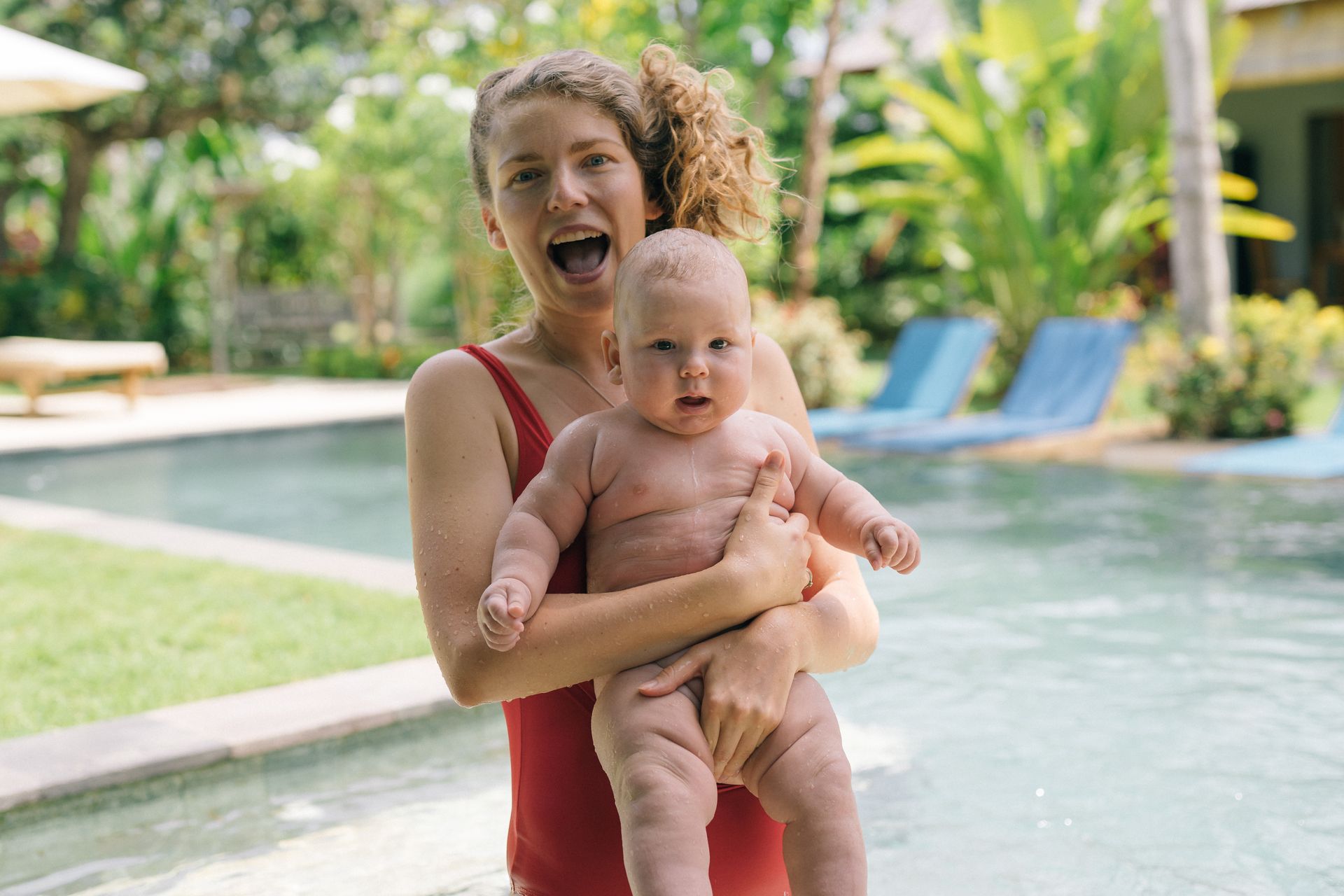
At MIA Swim School, our certified survival aquatic specialists provide individualized, 1-on-1 survival coaching across two convenient formats: our 18 climate-controlled 90°F warm-water therapy campuses across Miami-Dade County, or via private concierge instructor dispatch directly to your heated residential home or condominium pool. With transparent package pricing starting from personalized rates per session baseline, zero hidden registration fees, and comprehensive clothed simulation testing, we give your family the ultimate peace of mind.
Core Pillars
Core Pillars of Our Miami Infant Survival Program
Every survival lesson at MIA Swim School is engineered around behavioral psychology, motor memory repetition, and thermodynamic comfort. For parents seeking gentle, play-based parent-and-me classes rather than intensive self-rescue conditioning, please explore our Gentle Baby & Toddler Swim Lessons (Ages 3–36 Mo) portal.
The Proven Roll-to-Float Survival Reflex
We condition infants as young as 6 months to voluntarily rotate from a face-down position onto their back, floating calmly and breathing until help arrives.
Therapeutic 90°F Warm Water Guarantee
All 18 campus pools maintain guaranteed 90°F water with secondary UV sanitization, preventing muscle cramps and cold-induced panic.
Real-World Clothed Certification
In the final week, your child demonstrates their survival skills fully clothed in diapers, shoes, and winter clothing.
Medical & Physiological Auditing
Every child's medical and developmental history is reviewed prior to water entry, with daily tracking of fatigue and respiration.
Survival Biomechanics
The Biomechanics of Roll-to-Float: How ISR Swim Lessons in Miami Save Lives
When an infant or toddler falls into water accidentally, panic and disorienting sensory shock occur in seconds. Traditional arm-splashing and dog-paddling reflexes quickly exhaust a young child, causing them to slip beneath the surface within 20 to 30 seconds. The core objective of ISR Self-Rescue® is to replace chaotic panic with an automatic, life-saving motor sequence: the Roll-to-Float.
This biomechanical sequence relies on natural buoyancy and postural reflexes rather than muscular strength, allowing a baby to sustain life indefinitely while resting on their back.
The 4-Step Self-Rescue Motor Sequence
The following step-by-step sequence outlines how an infant autonomously saves their own life during an accidental water submersion.
Why Buoyant Floating Requires Absolute Relaxation
A tense baby sinks; a relaxed baby floats. Our certified survival coaches spend the initial phase of training teaching infants that the water is a supportive cushion. In our 90°F warm water, tense muscles relax, allowing the child to discover that when their head is tilted back and their lungs are inflated, their body floats effortlessly on the surface without exhausting kicks.
1. Orientation and Airway Protection
Upon entering the water, the infant immediately holds their breath without swallowing water and opens their eyes to orient their body horizontally toward the surface.
2. Head and Cervical Alignment
The baby rolls their chin toward their shoulder, initiating a gentle rotation of the cervical spine that triggers the rest of the torso to follow naturally.
3. Autonomous Back Rotation
The baby rotates 180 degrees from a face-down position onto their back, allowing buoyant fat deposits in the lungs and chest to elevate their mouth and nose above the water.
4. Relaxed, Sustained Postural Floating
The baby rests their ears comfortably in the water, relaxes their limbs, and breathes calmly, maintaining this restful posture until adult rescue arrives.
Developmental Sequences
Two Age-Appropriate Survival Sequences: Roll-to-Float & Swim-Float-Swim
A 7-month-old crawling infant and a 3-year-old running toddler possess vastly different physical coordination, leg strength, and spatial awareness. Our survival curriculum is divided into two distinct, age-appropriate progressions designed to maximize safety based on developmental capabilities.
By matching the curriculum to your child's physical milestones, we ensure every movement feels achievable, safe, and empowering.
Sequence 1: The Roll-to-Float (Infants 6 to 12 Months)
This sequence is designed for infants who are crawling or sitting independently but not yet walking confidently.
- Auditory and Cue Conditioning: Gentle conditioning prompts that teach the baby to seal their airway voluntarily before face submersion.
- Autonomous Rollover from Any Position: Training the baby to roll onto their back whether they enter the water feet-first, belly-first, or head-first.
- Sustained Postural Floating: Maintaining a steady, unassisted back float with clear mouth and nose clearance, breathing comfortably for several minutes.
- Graduation to Toddler Swimming: Once an infant begins walking, they seamlessly transition into the advanced Swim-Float-Swim sequence.
Sequence 2: The Swim-Float-Swim (Toddlers & Children 1 to 6 Years)
For toddlers who walk independently, survival requires mobility: the ability to swim toward safety, rest to breathe, and continue swimming until they reach the pool steps, a ladder, or the side wall.
- Face-Down Swimming & Propulsion: Swimming horizontally through the water using flutter kicks and reach-and-paddle arms with face submerged.
- Roll-to-Float Airway Rest: Rolling onto the back whenever the child needs air, floating calmly until respiration returns to normal.
- Flip-Over Resumption: Flipping back over into a swimming position to continue moving toward the pool steps or wall.
- Repeat Until Safe: Repeating the cycle (swim, float, swim) until reaching safety and climbing out using the pool edge.
Graduates of our survival program who want to continue into formal stroke development (freestyle, backstroke, breaststroke) transition smoothly into our Kids Swimming Lessons in Miami curriculum.
Thermodynamic Safety
Why 90°F Heated Water is Non-Negotiable for Infant Survival Swim Lessons
Water temperature is not simply a matter of comfort during infant survival training; it is a critical safety parameter that directly dictates whether an infant can learn the roll-to-float reflex. Infants lose body heat up to four times faster than adults due to their high surface-to-mass ratio and thin layers of subcutaneous fat.
In standard public or community pools heated only to 78°F to 82°F, an infant's body rapidly enters a state of mild hypothermia within 3 to 5 minutes.
The Neurological and Muscular Impact of Water Temperature
The comparison below details the physiological differences between cold commercial pools and our dedicated 90°F heated campus facilities.
| Physiological Parameter | Standard Commercial Pool (78°F–82°F) | MIA Swim School 90°F Heated Campus Pool |
|---|---|---|
| Muscle Tone & Suppleness | Rigid muscle contractions, shivering, and stiff spine | Supple, pliable neck and spine; relaxed back float |
| Respiratory Cadence | Rapid, shallow hyperventilation and gasping | Steady, rhythmic, and calm respiratory control |
| Cognitive Processing | Sympathetic fight-or-flight freeze response | Calm parasympathetic state receptive to motor learning |
| Active Practice Duration | Distress and shivering within 3 to 5 minutes | Comfortable, focused practice for full 10–15 min session |
| Skin and Eye Sensitivity | High chlorine odor, chemical eye stinging | Secondary UV sanitization; gentle on baby skin |
By maintaining a strict 90°F thermodynamic baseline across all 18 Miami campus pools, our instructors eliminate shivering, reduce stress-induced crying, and accelerate neurological muscle memory formation.
Florida Safety in Action
Real-World Clothed Simulation Testing: Florida Drowning Prevention in Action
A common misconception among parents is that children only drown while wearing swimsuits during supervised pool outings. In reality, tragic accidental submersions in Florida overwhelmingly occur during non-swimming times: when a toddler slips out of a sliding patio door during family gatherings, wanders away during outdoor barbecues, or tumbles into a canal while chasing a toy. In over 86% of these incidents, the child is fully dressed in street clothes, diapers, and heavy shoes.
The Physics of Wet Clothing: Why Simulation Matters
Water-soaked clothing, saturated disposable diapers, and waterlogged sneakers add significant weight and resistance, altering a child's natural center of gravity and pulling their face downward:
Overcoming Garment Drag
Heavy denim shorts and wet shirts restrict shoulder mobility, making standard arm paddles ineffective.
The Waterlogged Diaper Anchor
A fully soaked diaper can weigh several pounds, pulling the child's hips and lower spine downward and fighting against the back float.
Controlled Graduation Simulations
In the final week of our curriculum, your child performs their complete Roll-to-Float or Swim-Float-Swim sequence in full street clothes: first in summer attire (t-shirt, shorts, shoes, and diaper), and then in heavier winter clothing (sweatshirt, long pants, and sneakers).
Unshakable Parent Confidence
Seeing your child tumble into the water fully dressed and calmly roll onto their back to breathe provides an unmatched level of safety verification.
Medical Clearances & Vetting
Certified Infant Survival Instructors in Miami: Medical Clearances & Safety Standards
Teaching an infant life-saving survival reflexes requires far more than basic swimming skills; it demands specialized knowledge of pediatric anatomy, behavioral conditioning, and acute respiratory monitoring. We do not use general fitness instructors or seasonal lifeguards for survival swim lessons. Every survival specialist at MIA Swim School undergoes comprehensive, rigorous credentialing. Before your child ever touches water, our dedicated medical review team evaluates their confidential developmental history to ensure complete physical readiness.
Mandatory Safety and Credentialing Protocols
Every survival coach on our team adheres to strict operational safety standards. To meet the dedicated professionals who will guide your child's survival training, visit our Meet Our Certified Survival Coaches portal.
Specialized Survival Aquatic Certification
Comprehensive intensive certification in infant survival techniques, including over 100 hours of supervised in-water pediatric training.
Pediatric Medical Protocol Clearances
A thorough review of your baby's birth history, gestational age, pediatric milestones, and medical conditions prior to lesson scheduling.
Daily Physical and Fatigue Logs
Instructors record daily logs tracking your child's sleep quality, bowel movements, diet, and temperature to monitor physical readiness before every session.
Pediatric CPR/AED & First Aid
Certified in American Heart Association Pediatric Basic Life Support (BLS) and Infant CPR, renewed annually.
Livescan Level 2 Background Screening
Thorough criminal background checks conducted through the Florida Department of Law Enforcement (FDLE) and national criminal history databases.
Adaptive Special Needs Competency
Specialized training to support infants with low muscle tone or developmental delays in partnership with our Adaptive Special Needs Swim Coaching team.
Evaluation Process
Personalized Private Swim Instruction: 4-Step In-Water Assessment & Dedicated Coach Matching
Every swimmer is unique. Rather than rigid one-size-fits-all packages or static rate cards, MIA Swim School begins with a comprehensive, low-stress evaluation to assess current comfort levels, natural buoyancy, and individual aquatic goals.
Step 1: In-Water Skill Diagnostic
A supportive 1-on-1 evaluation conducted by an American Red Cross certified coach in our pristine heated 90°F pool or your private condominium pool.
Step 2: Custom Milestone Roadmap
Your coach formulates a customized instructional plan tailored to your learning velocity—whether developing foundational water acclimation, toddler survival breathing, or refined bilateral stroke mechanics.
Step 3: Dedicated Instructor Placement
We match each student with a vetted, background-checked (Livescan Level 2, WSI/CPR) coach who remains your dedicated mentor throughout your lessons.
Step 4: Concierge Scheduling & Peace of Mind
Choose consistent weekly times that seamlessly fit your family's lifestyle, backed by our 100% weather makeup guarantee and Certificate of Insurance (COI).
Campus Network
18 Heated Pool Campuses & In-Home Survival Coaching Across Miami-Dade County
Because survival swimming requires daily consistency over several weeks, finding a convenient location close to your home or office is essential. MIA Swim School maintains 18 dedicated campus facilities and municipal partner aquatic centers across Miami-Dade County. Every facility in our network features guaranteed 90°F warm water, secondary UV water purification, and private family changing cabanas.
Select your local neighborhood below to view facility details, driving directions, and pool hours:
Coastal & Urban Miami Campuses
Families living in downtown high-rises and coastal waterfront districts have convenient access to our dedicated pool lanes with easy parking:
- Brickell: Brickell ISR Survival Swim Lessons — Jose Marti Aquatic Center campus at 351 SW 4th St, Miami, FL 33130.
- Downtown & Edgewater: Downtown Edgewater ISR Swim Lessons — Margaret Pace Park Pavilion at 1745 N Bayshore Dr, Miami, FL 33132.
- Miami Beach: Miami Beach Infant Survival Swim Lessons — Flamingo Park Aquatic Center at 999 11th St, Miami Beach, FL 33139.
- Sunny Isles Beach: Sunny Isles ISR Swim Lessons — Pelican Community Park at 18115 N Bay Rd, Sunny Isles Beach, FL 33160.
- Aventura: Aventura Infant Survival Swimming — Founders Park Campus at 3375 NE 188th St, Aventura, FL 33180.
- Bal Harbour & Surfside: Bal Harbour Surfside ISR Swim Classes — Surfside Community Center at 9301 Collins Ave, Surfside, FL 33154.
- Key Biscayne: Key Biscayne ISR Survival Swim Lessons — Key Biscayne Community Center at 10 Village Green Way, Key Biscayne, FL 33149.
Historic Neighborhoods & Family Communities
For parents in Miami-Dade's family-centered residential suburbs, our partner locations offer serene, heated pool environments with dedicated youth lap lanes:
- Coral Gables: Coral Gables ISR Survival Swim Lessons — Venetian & Youth Center Pavilion at 2701 de Soto Blvd, Coral Gables, FL 33134.
- Coconut Grove: Coconut Grove Infant Survival Swim Classes — Peacock Park Campus at 2690 S Bayshore Dr, Coconut Grove, FL 33133.
- Pinecrest: Pinecrest ISR Survival Swimming Lessons — Pinecrest Community Center at 5855 SW 111th St, Pinecrest, FL 33156.
- South Miami: South Miami Infant Survival Swim Lessons — Murray Park Aquatic Campus at 5800 SW 66th St, South Miami, FL 33143.
- Palmetto Bay: Palmetto Bay ISR Swim Lessons — Coral Reef Park Campus at 7895 SW 152nd St, Palmetto Bay, FL 33157.
- Kendall: Kendall ISR Survival Swim Classes — Continental Park Aquatic Pavilion at 10000 SW 82nd Ave, Miami, FL 33156.
- West Kendall: West Kendall ISR Swim Lessons — Westwind Lakes Campus at 15700 SW 112th St, Miami, FL 33196.
- Doral: Doral ISR Survival Swim Lessons — Doral Legacy Park Campus at 11400 NW 82nd St, Doral, FL 33178.
- Miami Springs: Miami Springs Infant Survival Swim Classes — Miami Springs Aquatic Center at 1401 Westward Dr, Miami Springs, FL 33166.
- Miami Lakes: Miami Lakes ISR Swim Lessons — Royal Oaks Park Campus at 6075 Miami Lakes Dr, Miami Lakes, FL 33014.
- North Miami Beach: North Miami Beach ISR Swim Lessons — Victory Park Aquatic Center at 17051 NE 19th Ave, North Miami Beach, FL 33162.
Frequently Asked Questions
Frequently Asked Questions About ISR Swim Lessons in Miami
Starting survival swimming brings up vital questions about emotional well-being, schedule logistics, and safety protocols. Here are direct answers to the most common questions Miami parents ask our survival intake coordinators.
Why do infants cry during ISR survival swim lessons?
Infants communicate unfamiliar effort, sensory change, and physical exertion through crying. In survival training, crying is not an indication of fear or emotional trauma; rather, it is a healthy vocalization that ensures an open airway and regular respiration. Our certified coaches use gentle behavioral conditioning, keep lessons to focused 10-minute micro-sessions, and maintain parent proximity at the pool edge.
Why are lessons structured in 10-minute daily sessions?
Infants have short cognitive attention windows and fatigue quickly in water. Short daily 10-minute sessions prevent physical exhaustion and hypothermia while maximizing neurological muscle memory retention. By practicing five consecutive days a week, children build instinctive survival reflexes four times faster than once-a-week lessons.
What is the final clothed simulation test?
Over 86 percent of child drownings occur when children fall into water fully clothed. During the final week of lessons, your child undergoes a controlled simulation in full street clothes, diapers, and shoes. Parents witness firsthand that their child can roll onto their back, maintain an open airway, and float indefinitely even when weighted down by wet garments.
At what age can my baby begin certified ISR survival lessons?
Babies can begin ISR Roll-to-Float survival lessons as early as 6 months of age, provided they can sit up independently and hold their head steady. Children between 1 and 6 years learn the comprehensive Swim-Float-Swim sequence, enabling them to navigate to steps or pool walls.
Why is 90°F warm water critical for infant survival swimming?
Infants lose body heat rapidly. In cool commercial pools (78°F to 82°F), an infant's neck and spinal muscles tense up, triggering shivering that prevents the delicate head-roll maneuver. In our guaranteed 90°F warm-water campus pools, infant muscles remain relaxed and receptive to neuromuscular patterning.
Can an ISR instructor teach in our private backyard or condo pool?
Yes. Our certified survival coaches travel to private residences and residential condominium pools across Miami-Dade County. The pool water must be heated to at least 88°F to 90°F. We provide a Certificate of Insurance (COI) naming your property management or HOA. Learn more in our Condo HOA & COI Guidelines.
Reserve Your Assessment
Reserve Your Child's Survival Swim Assessment in Miami
Protect your child with the proven gift of aquatic self-rescue. Fill out our simple intake form below to schedule a private survival swimming assessment at one of our 18 heated campus pools or in the convenience of your heated home pool. Our medical review coordinator will match you with a certified survival specialist whose schedule aligns with your family's routine.
I consent to receive appointment notifications and scheduling updates via SMS or phone call in accordance with Florida Stat. § 501.059 (FTSA). I confirm that I am the parent or legal guardian aged 18 or older. Reply STOP to cancel.
"*" indicates required fields