Pool safety for toddlers comes down to layers. No single fence, alarm or swim lesson is enough on its own, so families who keep little ones safe stack several protections: an adult watching within arm’s reach, a barrier that keeps a toddler away from the water when nobody is swimming, alarms that warn you if that barrier fails, and age-appropriate swim lessons. This guide walks through each layer for Miami families with a home or condo pool.
Why it matters here: the CDC reports that drowning is the leading cause of death for children ages 1 to 4, and most of those drownings happen in home swimming pools. In South Florida, where pools are open all year, the risk never takes a season off.
Why toddlers are at the highest risk around pools
Toddlers are fast, curious and top-heavy. A child between 1 and 4 can walk, climb and open doors, but cannot yet judge danger or reliably get back to the wall after a fall into water.
Drowning is also quiet. A toddler who slips in usually does not splash or call out. It can happen in the time it takes to answer a phone or carry groceries inside, which is why the most common story is “I only looked away for a minute.”
Many incidents happen when nobody planned to swim at all: during a family gathering, right after a swim when everyone has gone inside, or when a door to the pool area was left open.
Layer 1: Supervision that actually works
Supervision is the most important layer, and also the one most likely to slip. Two habits make it reliable.
Touch supervision for children under 5
The American Academy of Pediatrics recommends “touch supervision” for young and weak swimmers. That means an adult is in the water or at the edge, close enough to reach the child at any moment. Watching from a lounge chair across the deck does not count.
Name a Water Watcher
At parties, everyone assumes someone else is watching. Pick one sober adult as the Water Watcher, ask them to put the phone away, and hand the job off out loud every 15 to 20 minutes. Some families use a lanyard or tag so it is obvious who is on duty.
- No phones, books or side conversations while you are the watcher.
- Count heads every few minutes, especially when kids get in and out.
- If a child is missing, check the pool first. Seconds matter.
- Clear toys out of the water after swim time so nothing tempts a toddler back to the edge.
Layer 2: Barriers that keep toddlers away from the water
Supervision covers swim time. Barriers cover all the other hours of the day, when a toddler might wander outside on their own.
What Florida law requires for new home pools
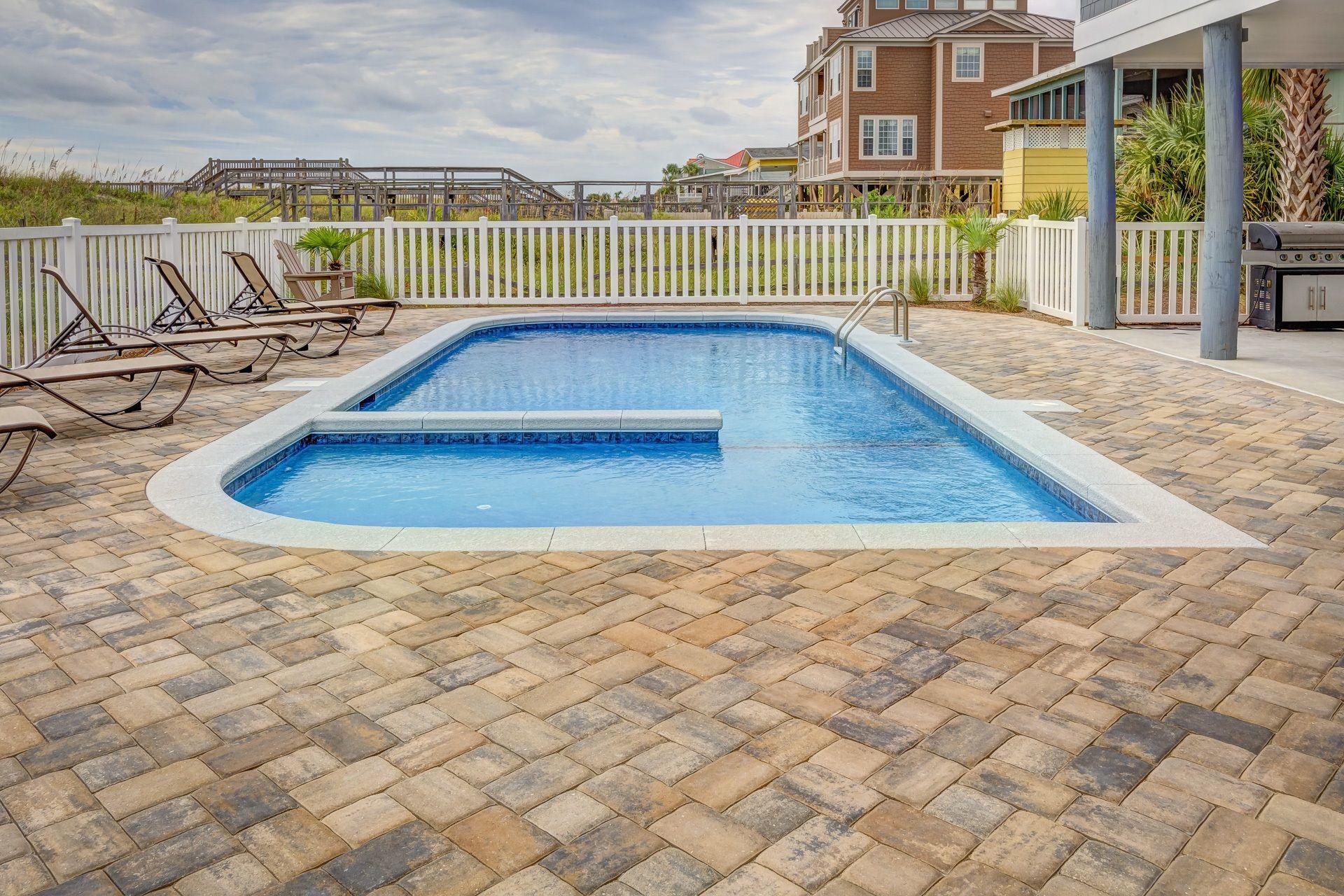
Florida’s Residential Swimming Pool Safety Act (Chapter 515 of the Florida Statutes) says a new residential pool must have at least one of these features to pass final inspection:
- A pool barrier or enclosure that separates the pool from the house.
- An approved safety pool cover.
- Exit alarms on every door and window that opens directly to the pool.
- Self-closing, self-latching devices on those doors, with the release at least 54 inches above the floor.
- A pool alarm that sounds when someone enters the water, certified to the ASTM F2208 standard.
The law sets a minimum. For a home with a toddler, one feature is rarely enough. Many families combine a fence with door alarms, so a single mistake, like a propped gate, does not leave the water open.
Child safety pool fence tips
- Choose a fence at least 4 feet high that a child cannot climb, with no footholds or gaps they can squeeze through.
- Make sure the gate opens away from the pool, closes by itself and latches by itself.
- Keep chairs, planters and toys away from the fence so they cannot be used as a step.
- Removable mesh fences work well for families who rent or want an open look when adults are swimming, as long as they go back up every time.
Safety covers
An approved safety cover is anchored and designed to hold weight. A loose solar or leaf cover is not a safety cover and can be dangerous, because a child can slip under it and become trapped.
Layer 3: Pool alarms and toddler pool safety devices
Alarms are your backup for the moment something else fails. They do not replace supervision or a barrier.
| Device | What it does | Good to know |
|---|---|---|
| Door and window alarms | Sound when a door or window to the pool area opens | One of the Florida options; useful in every home with a toddler |
| Pool (water) alarm | Sounds when something enters the water | Look for ASTM F2208 certification |
| Gate alarm | Sounds when the pool gate is left open | Pairs well with a self-latching gate |
| Wearable alarm | Worn by the child, alerts when they go underwater or out of range | Florida law does not count it as a qualifying pool alarm; use it only as an extra layer |
Test alarms regularly and replace batteries on a schedule. An alarm that has been switched off “just for today” offers no protection.
Layer 4: Swim lessons and water-competency skills
The AAP notes that swim lessons can lower drowning risk for many children starting around age 1. For toddlers, the goal is not a perfect stroke. It is water competency: getting comfortable in the water, learning to turn back to the wall, holding on, and climbing out.
Lessons are a layer, not a guarantee. A toddler who has had lessons still needs touch supervision and a barrier. Be wary of anyone who promises a child will be “drown-proof.”
Learning in the pool your child actually lives with has a real advantage. They practice finding the steps and the wall in the exact place they would need to. That is why our infant and toddler swim lessons take place one-on-one at your own home or condo pool, with a parent nearby so you learn the routines too. For older children, see our kids swimming lessons.
Other pool safety tips for families with toddlers
Pick a bright swimsuit
Water safety groups that test swimsuit colors have found that bright, high-contrast colors like neon pink, orange and yellow are the easiest to spot under water. Light blue, white and gray tend to disappear against a pool finish. If you are wondering what color swimsuit is best for pool safety, go bright.
Use life jackets, not floaties
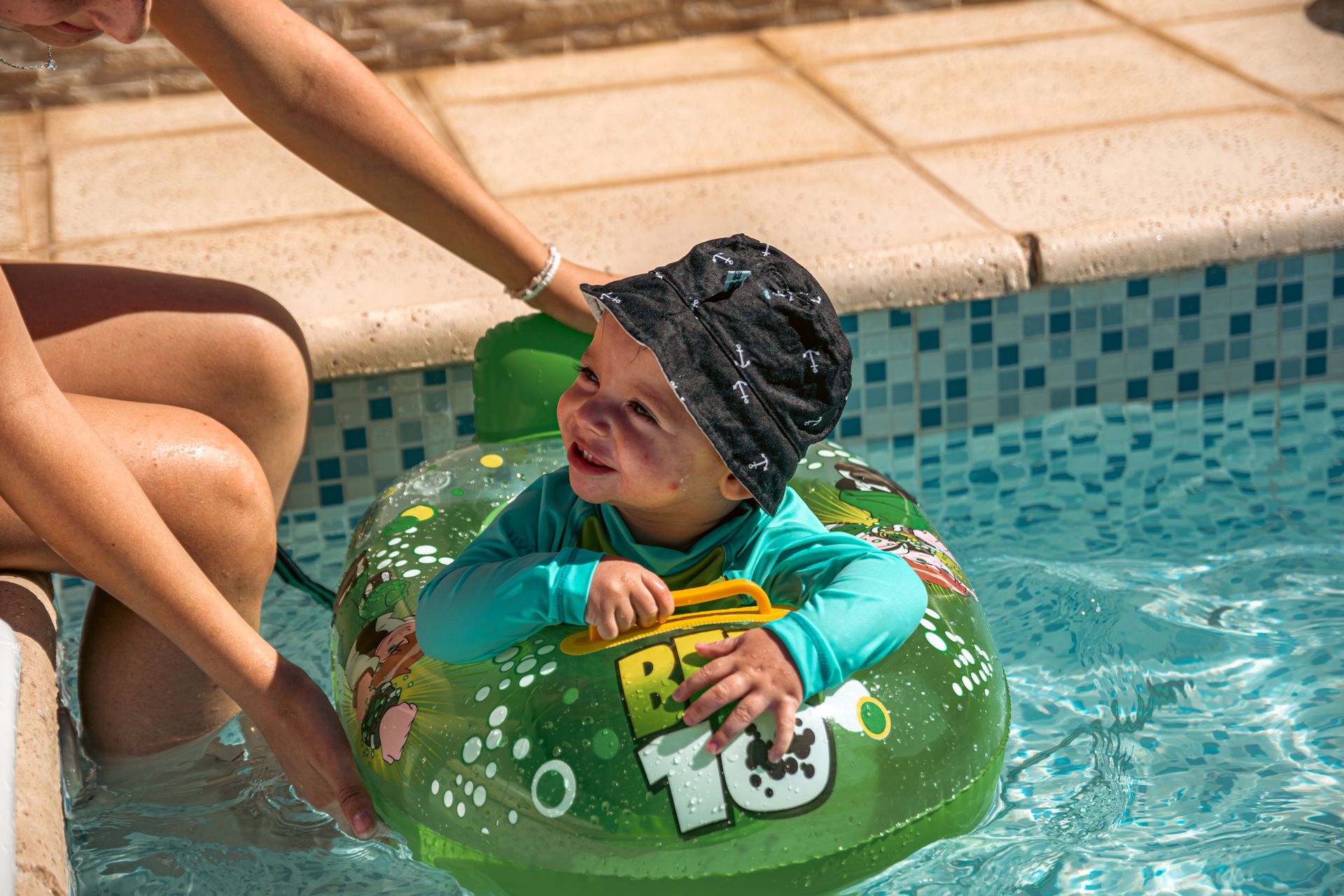
Arm floaties and inflatable rings are toys. They can slip off or tip a child forward. Around open water or a boat, use a U.S. Coast Guard approved life jacket that fits your child’s weight.
Check the drains
Strong suction from a broken or missing drain cover can trap hair, limbs or swimwear. Ask your pool company to confirm your drain covers meet the Virginia Graeme Baker Pool and Spa Safety Act, and teach kids to stay away from drains and filter openings.
Learn CPR
Parents, grandparents and nannies should all know infant and child CPR. The American Red Cross and the American Heart Association offer short classes in Miami-Dade. Keep a phone poolside for emergencies only.
Condo pools need a plan too
Shared condo pools usually have a fence and gate, but those gates are often propped open by other residents. Hold your toddler’s hand from the elevator to the pool, and never assume a lifeguard is on duty. If you are planning lessons at your building, our condo pool guidelines explain what most associations ask for.
Toddler pool safety checklist
- An adult within arm’s reach every time a toddler is near the water.
- A named Water Watcher at every gathering.
- A fence or barrier with a self-closing, self-latching gate.
- Alarms on doors and windows leading to the pool.
- A pool alarm or approved safety cover as an extra layer.
- Toys out of the pool after swimming.
- Bright swimsuits and a properly fitted life jacket where needed.
- Compliant drain covers.
- CPR training for every caregiver.
- Age-appropriate swim lessons in the pool your child uses.
Frequently asked questions
How do I make my pool safe for a toddler?
Use several layers at once: touch supervision, a fence with a self-latching gate, alarms on doors and the pool, and swim lessons. Each layer covers a gap the others can leave.
What are the best toddler pool safety devices?
A child safety pool fence with a self-closing gate, door and window alarms, and an ASTM F2208 pool alarm are the most useful. Wearable alarms can add protection but should never be the only device.
At what age can a toddler start swim lessons?
The AAP says many children can benefit from swim lessons starting around age 1. Talk with your pediatrician about your child’s readiness.
Are floaties safe for toddlers?
No. Floaties and inflatable rings are toys and can give a false sense of security. Use a Coast Guard approved life jacket when a flotation device is needed, and stay within arm’s reach regardless.
Want your toddler to build water skills in your own pool? Contact MIA Swim School to book a first private lesson anywhere in our Miami-Dade service area.