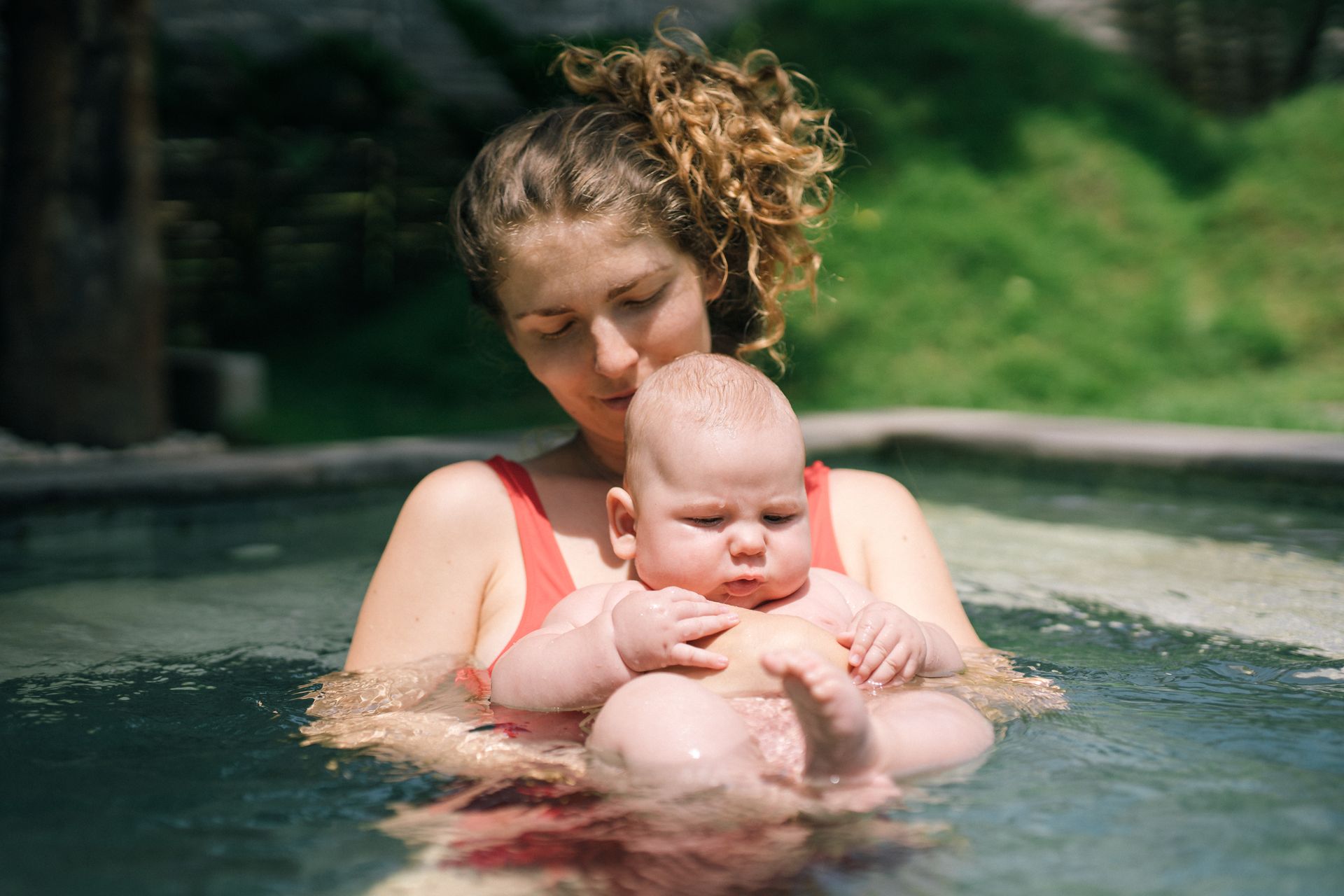
When can babies go in the pool? Most pediatric guidance says around 6 months old is the right time for a first real pool session. By then most babies have steady head control, they hold their body temperature a little better, and properly fitted infant flotation starts to become an option. Younger babies can be held in warm, clean water for a few minutes, but the risks of getting cold, sunburned, or sick are higher, so many families simply wait.
Age is only part of the answer, though. Water temperature, sun, chlorine levels, swim diapers, and who is holding the baby matter just as much. Here is how we think about a baby’s first time in the pool, especially for Miami families with a pool at home or in a condo building.
The short answer: around 6 months
There is no single law or rule that sets a minimum age for swimming. The 6 month mark is a practical guideline that comes up again and again from pediatric sources, including the Cleveland Clinic, for a few reasons:
- Head and neck control. Around 6 months most babies can hold their head up well, which makes it easier and safer to hold them in the water.
- Temperature. Young babies lose body heat quickly. Water that feels pleasant to an adult can chill a small baby within minutes.
- Sun protection. Sunscreen is generally not recommended for babies under 6 months, which makes an outdoor pool in South Florida sun harder to manage.
- Flotation. Most life jackets are not designed to fit babies under 6 months, so there is no backup if a hold slips.
If your baby is younger and you want to introduce water, a warm bath at home is the best first step. Gentle pouring, splashing, and floating on their back with your hands underneath all build comfort before the pool.
What changes at each age
Every baby develops at their own pace, so treat this as a general guide and check with your pediatrician if your baby was born early or has a health condition.
| Age | What it can look like | Main things to watch |
|---|---|---|
| 0 to 2 months | Bath time only for most families | Umbilical cord healing, body heat, very short exposure |
| 2 to 6 months | A few minutes in warm, clean water held by a parent, if the pediatrician agrees | Water temperature, shade, no sunscreen, swim diaper |
| 6 to 12 months | Short pool sessions with a parent, songs, gentle floating and splashing | Session length, shivering, touch supervision |
| 12 months and up | Structured water play and the start of real skills like kicking and back floating | Pool barriers, door access, constant supervision |
Can a baby go in a chlorine pool?
Yes, a properly maintained chlorinated pool is generally fine for babies once they are old enough to swim. The key word is properly. Chlorine kills germs, and a pool with too little of it is a bigger risk to a baby than one with the right amount. Problems usually come from levels that are off in either direction.
- If the water smells strongly of chemicals, looks cloudy, or stings your eyes, skip it for the day.
- Saltwater pools still make chlorine and still need the same testing and maintenance.
- Rinse your baby with fresh water after the swim and use a gentle moisturizer if their skin is dry.
Hot tubs and spas are a different story. Their water is too hot for babies and young children, and most guidance says to keep children under 5 out of them entirely.
When can a baby go in a pool at home?
A home or condo pool is often the best first pool a baby can have. You know who uses it, you can check the water, and there is no crowd or long walk from the car. The same age guidance applies, but you have more control over the details that matter.

Pick the right time of day
In Miami the midday sun is strong all year. Early morning or late afternoon sessions mean less UV, less glare, and a calmer baby. Bring a hat, a long sleeve swim shirt, and an umbrella or shaded corner, especially for babies under 6 months who should not wear sunscreen.
Check the water temperature
Pool water around 78°F feels refreshing to adults but can cool a baby quickly. Warmer water is more comfortable, and in South Florida many home pools are warm enough for much of the year. Even so, keep the first sessions short and watch your baby closely.
Keep it short
Plan for about 10 minutes the first time and work up to no more than about 30 minutes. Get out right away if you see any of these signs:
- Shivering or chattering teeth
- Cool skin or pale or bluish lips
- Fussing, crying, or turning away from the water
Wrap your baby in a towel as soon as they come out. A warm, happy ending makes the next swim easier.
Swim diapers: what actually works
Babies who are not toilet trained should wear a swim diaper, and many parents put a reusable swim diaper or snug swim pants over a disposable one. Swim diapers hold solids but do not keep everything in, so they are not a reason to relax about hygiene.
- Check the diaper often, roughly every hour, and change it as soon as it is soiled.
- Change diapers in a bathroom or changing area away from the pool deck, not at the edge of the water.
- Keep babies with diarrhea out of the pool until they are well.
- Regular diapers swell up with water and should never be used for swimming.
Safety rules for babies around any pool
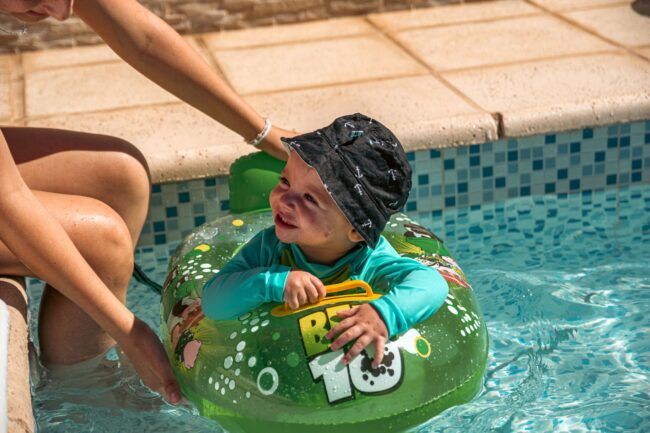
A baby in the pool is always within arm’s reach of an adult. We call this touch supervision: one adult, hands on or able to touch the baby at all times, with no phone and no distractions. Floats, rings, and inflatable arm bands are toys, not safety devices, and they can tip a baby face down.
The bigger risk for babies and toddlers is not swim time. It is the moment nobody is watching and a child reaches the pool on their own. That is why layers of protection matter as soon as your baby can crawl:
- A fence or barrier with a self-closing, self-latching gate between the house and the pool
- Alarms on doors and gates that open toward the water, which we cover in our guide to pool alarms for kids
- Toys and floats removed from the water after every swim so they do not tempt a child back
- Every adult and caregiver in the home knowing CPR
Our layered guide to pool safety for toddlers walks through each of these in more detail. If you live in a building, the rules and access points are different, and our condo pool guidelines explain how we work with shared pools.
From first splash to first lessons
A baby’s first year in the water is about comfort and trust, not strokes. The best early sessions are playful: singing, gentle bouncing, back floats with your hands underneath, pouring water over shoulders, and lots of eye contact. Babies who learn to enjoy the water early usually find later lessons much easier.
When your child is ready for more structure, private lessons in your own pool remove a lot of stress. There is no travel, no crowd, and the water is the same one your child will play in every week. Our baby and toddler swim lessons take place at your home or condo pool across Miami-Dade, with an instructor and one child at a time, and a parent nearby for the youngest swimmers.
Swim lessons are one layer of protection. They never replace supervision, barriers, or an adult within arm’s reach.
Frequently asked questions
Can babies go in the pool at 2 months?
Some pediatricians are comfortable with a very short, held dip in warm, clean water at this age, but most families wait until about 6 months. A 2 month old loses heat quickly, cannot wear sunscreen, and has no flotation that fits. Talk to your pediatrician first, and keep it to a few minutes if you do.
When can a baby go in a pool at home?
The same general guidance applies, around 6 months. A home pool makes it easier to control water quality, shade, and timing, but your baby still needs touch supervision every second, and the pool still needs a barrier for when nobody is swimming.
When can a baby go in a chlorine pool?
Once your baby is old enough to swim, usually around 6 months, a well maintained chlorinated pool is generally fine. Avoid water that smells strongly of chemicals or looks cloudy, and rinse your baby with fresh water afterward.
Do babies need to wear diapers in the pool?
Yes. Babies who are not toilet trained should wear a swim diaper, often with snug swim pants over it. Check it about once an hour and change it away from the water. Regular diapers soak up water and should not be used.
When should a baby start swim lessons?
Parent and baby water play can start around 6 months. More structured lessons often begin when a child is a toddler, depending on their comfort and readiness. An instructor can help you judge where your child is.
Ready for your baby’s first swim?
If you want help making your baby’s first pool experiences calm and safe, we come to your home or condo pool anywhere in Miami-Dade. Contact us to ask a question or book a first lesson.